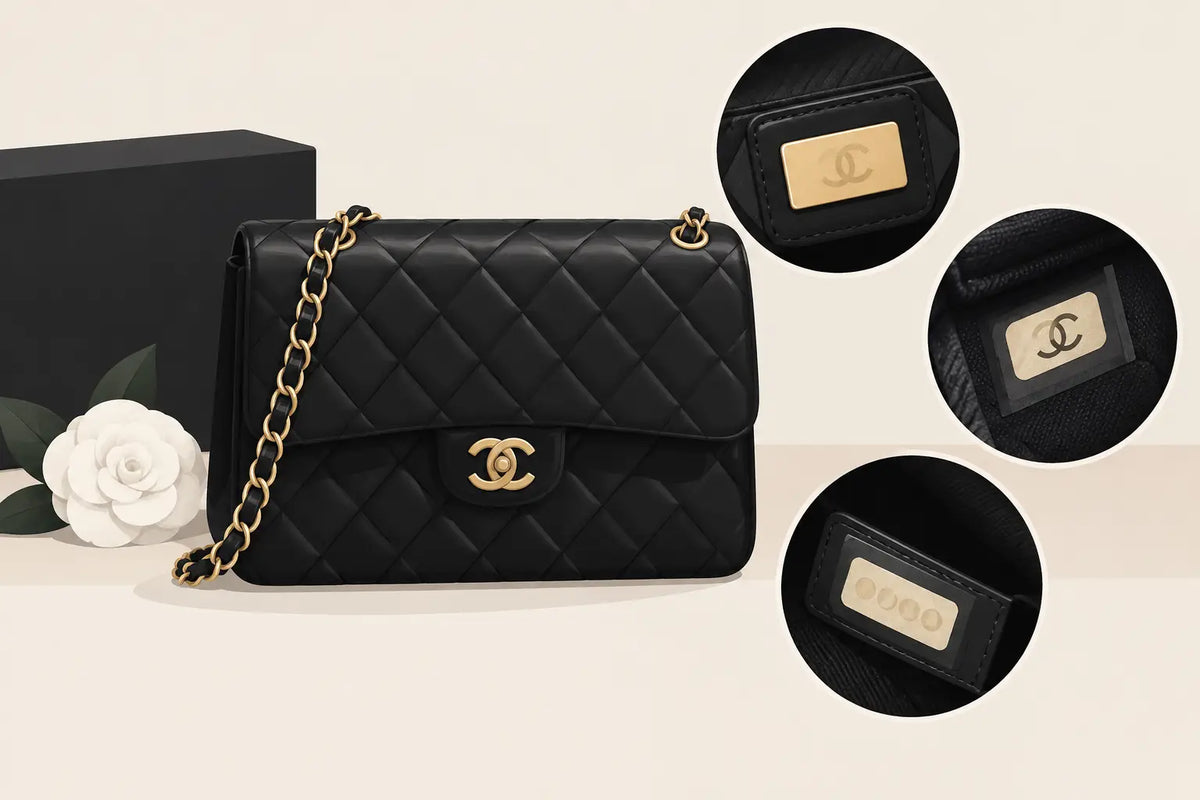
A Guide to Chanel Bag Stamps and Date Codes
A Chanel stamp is often one of the first details a knowledgeable buyer checks, but it should never be the only one. In this guide to Chanel bag stamps, we break down what these markings can reveal about a bag’s era, construction, and potential authenticity - and where careful inspection must go further.
For collectors and first-time buyers alike, the appeal is clear: Chanel bags are icons of fashion history and enduring resale value. That desirability also makes them a frequent target for sophisticated counterfeits. Understanding stamps, serial stickers, and hardware engravings helps you ask better questions before bringing home a pre-owned piece.
What Is a Chanel Bag Stamp?
A Chanel bag stamp is the brand marking found inside many Chanel handbags. Usually heat-stamped on the interior leather or lining, it commonly includes the CHANEL name and a country-of-origin line, such as MADE IN FRANCE or MADE IN ITALY.
On classic flap bags, the stamp is often located beneath the interior flap, above or near the back pocket. Placement varies by style, material, production period, and interior design. A tote, vanity case, or seasonal runway bag may position its stamp differently, so an unexpected location is not automatically a concern.
The stamp should feel intentional and cleanly executed. Lettering is generally crisp, proportionate, and aligned, with spacing that appears balanced rather than crowded or irregular. On leather interiors, the impression may be subtle, especially on soft lambskin or vintage bags. A very deep stamp is not necessarily better, and a faint stamp is not necessarily wrong. Leather type, wear, lighting, and age all affect how it appears.
A Guide to Chanel Bag Stamps: What to Examine
The word CHANEL is the central detail. Authentic examples generally show consistent letter shapes and measured spacing. The letters should not look bubbly, shaky, excessively thick, or unevenly pressed. The two Cs within the brand name, as well as the overall width of the word, are details experienced authenticators compare carefully.
Below the logo, country-of-origin text should also be neatly rendered. Chanel has manufactured bags in more than one country, and a bag marked MADE IN FRANCE is not inherently more authentic or more valuable than one marked MADE IN ITALY. The appropriate marking depends on the bag and production era, not a hierarchy of quality.
Color is another point of inspection. On many bags, the stamp is finished in gold, silver, or a tonal treatment that coordinates with the hardware. However, there is no single rule that applies to every Chanel bag. Vintage pieces, limited editions, exotic materials, and seasonal designs can differ. Treat an unusual stamp color as a reason to investigate, not as a verdict.
Most importantly, compare the stamp to the bag as a whole. The logo stamp, quilting, chain construction, CC turn-lock, stitching, leather quality, lining, zipper, and overall craftsmanship should tell a consistent story. Authenticity is determined through a complete assessment, not one attractive close-up.
Why Fonts Alone Are Not Enough
Font comparisons can be useful, but they are easy to overstate. Chanel has produced handbags across decades, factories, leathers, and collections. Minor variation can occur, particularly on older bags or stamps affected by use and restoration.
Counterfeiters also know buyers inspect fonts. Some replicas imitate the general look of a stamp convincingly while missing more technical details elsewhere. A stamp that appears correct cannot validate a bag with poor stitching, incorrect hardware weight, or an inconsistent serial element.
Chanel Serial Stickers and Date Code Context
For many years, Chanel bags included a serial-number sticker inside the bag, typically accompanied by a matching authenticity card. These stickers are frequently described as “date codes,” but they are more accurately serial-number labels that can help identify an approximate production period.
Earlier stickers and later stickers differ in color, layout, security features, and digit count. Details such as hologram effects, cut lines, gold flecks, and printed formatting evolved over time. Authenticity cards also changed across eras. There is no universal sticker design that applies to every authentic Chanel bag.
A missing sticker deserves attention, but it does not automatically disqualify a vintage bag. Stickers can wear away, detach, or be removed during cleaning or repair. The trade-off is that a bag without its original serial sticker may require closer evaluation and can be more difficult to resell than a comparable example with complete identifiers.
Since 2021, Chanel has moved away from the traditional sticker-and-card system for many newer bags, using an embedded metal plaque with a unique code instead. This means buyers should be wary of blanket claims that every authentic Chanel must have a sticker or a card. The correct identifier depends on when the bag was made.
Do Authenticity Cards Prove a Chanel Bag Is Real?
No. An authenticity card is supporting material, not conclusive proof. Cards can be lost, separated from their original bag, or counterfeited. Likewise, a serial sticker can be copied or transferred. The number on a card and sticker may match, yet the bag can still be inauthentic.
Original packaging, dust bags, receipts, and boutique paperwork can add useful provenance, particularly when the details align. Still, accessories should never outweigh the physical bag itself. A strong authentication process begins with construction and continues through every available identifier.
Hardware Engravings Matter, Too
Chanel hardware provides another layer of evidence. The CC turn-lock, chain hardware, zipper pull, interior plaque, and other metal components may carry engravings or branding. These marks should be clean and appropriately finished, without rough edges, misspellings, or weak plating.
That said, hardware is highly style-specific. Some authentic Chanel bags have branded zipper pulls, while others use hardware from established manufacturers or feature no obvious engraving at all. Older bags may also show scratches, fading, or plating wear consistent with their age. Condition disclosure matters here: honest signs of use are very different from poor original workmanship.
Examine how hardware functions, not only how it photographs. A turn-lock should operate smoothly, chains should feel substantial and well assembled, and screws should be appropriate to the style. One isolated detail rarely provides an answer. A pattern of inconsistencies is far more meaningful.
Vintage Chanel Requires a Different Lens
Vintage Chanel is especially rewarding, but it calls for context. A bag made decades ago may have a softened stamp, a worn serial sticker, aged hardware, or an interior that reflects years of careful use. Those characteristics can be entirely appropriate for an authentic piece.
Avoid judging vintage bags against the finish of a current boutique purchase. Instead, consider whether wear is consistent across the bag. A naturally aged leather exterior paired with a suspiciously new-looking sticker, for example, deserves a closer look. Conversely, an older bag with honest patina and coherent period details can be an exceptional addition to a collection.
Repairs and restoration also matter. A refurbished interior, replaced zipper, or re-plated hardware should be disclosed because it can affect collector value. Restoration does not automatically make a bag undesirable, but transparency allows buyers to decide what works for their wardrobe and investment goals.
When to Rely on Professional Authentication
Photos of a Chanel stamp can be helpful when shopping online, but they cannot replace a full examination by trained experts. Lighting can distort color, macro images can exaggerate impressions, and sellers may unintentionally omit the details that matter most.
Before purchasing a high-value pre-owned Chanel bag, request clear images of the interior stamp, serial identifier or metal plaque, hardware, corners, stitching, lining, and any condition concerns. Then consider the seller’s authentication process, return terms, and willingness to provide straightforward answers. A curated luxury retailer should make confidence part of the purchase, not an extra you have to negotiate.
At The Luxe Affair, authenticated pre-owned luxury is approached with the level of scrutiny iconic pieces deserve. Third-party authentication support and detailed condition presentation help buyers focus on the pleasure of owning a Chanel bag, with a clearer understanding of what they are choosing.
A Chanel stamp is a meaningful clue, not a standalone certificate. The best purchase is one supported by consistent craftsmanship, accurate era details, transparent condition information, and professional authentication - so the bag you carry feels as assured as it looks.