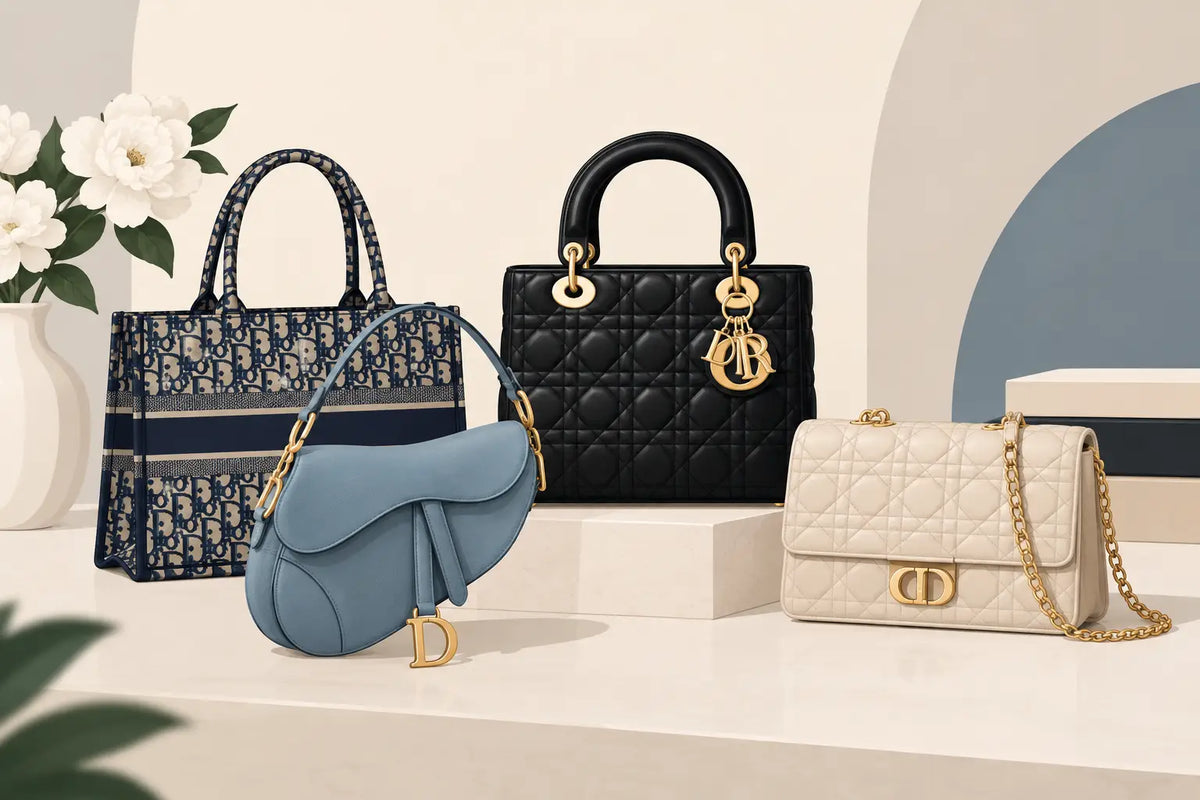
Dior Authenticity Cards: What They Really Tell You
A Dior authenticity card can feel like the final reassurance when you are considering a Lady Dior, Saddle Bag, Book Tote, or a rare vintage find. But in the pre-owned market, Dior authenticity cards are only one piece of the story. A card can support a bag’s history. It cannot, by itself, establish that the bag is authentic.
That distinction protects smart luxury shoppers. Counterfeiters understand that buyers look for cards, dust bags, receipts, and boxes, so those accessories can be copied, sold separately, or paired with the wrong bag. The most confident purchase is built on the item itself: its materials, craftsmanship, construction, hardware, and details assessed as a complete picture.
What Are Dior Authenticity Cards?
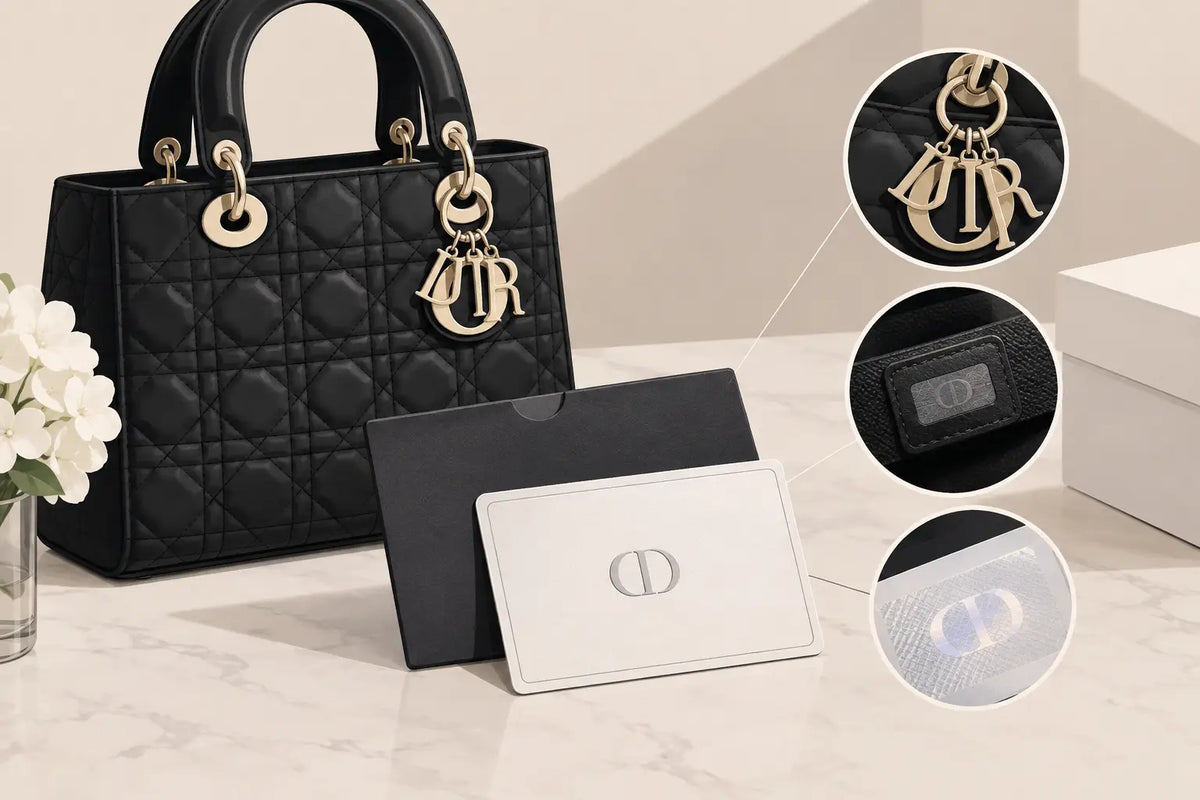
Dior authenticity cards are documents that may accompany certain Dior products, particularly handbags and accessories. Depending on the era and product, the card may feature Dior branding, a serial or reference-related detail, boutique information, a date, or other printed elements. Formats have changed over time, and not every genuine Dior item was issued with identical paperwork.
This matters because there is no single card design that applies to every authentic Dior bag. A vintage Dior handbag can have different accompanying materials than a recent boutique purchase. Regional practices, product category, and the original point of sale may also affect what a buyer received.
Think of the card as provenance, not a verdict. When it is original to the piece and consistent with its age, it adds useful context. When it is missing, that absence should not automatically disqualify an otherwise authentic bag. Many owners misplace cards long before a handbag enters the resale market.
Why Dior Authenticity Cards Are Not Proof Alone
An authenticity card is portable. That is exactly why it is vulnerable to misuse. Cards can be reproduced with convincing printing, removed from an authentic item and retained, or matched to a counterfeit bag. A card may also belong to a different Dior piece from the same owner’s collection.
Even a number printed on a card should be evaluated carefully. A number that appears plausible is not enough if it does not align with the bag’s internal label, construction, or expected production details. Conversely, slight differences in formatting do not automatically mean a bag is counterfeit, especially when evaluating older pieces.
The resale market rewards a more complete standard. An authentic Dior bag should make sense from every angle, not only from the accessories photographed beside it. That is why established authentication evaluates the handbag first and treats accompanying documents as supporting evidence.
How to Evaluate a Dior Bag Beyond the Card
A proper review begins with the details Dior is known for: intentional craftsmanship, refined materials, and a level of finish that should feel cohesive throughout the piece. The exact indicators depend on the model, collection, and year, but the questions remain consistent.
Examine materials and construction
Leather should feel appropriate for the style, whether that means supple lambskin on a Cannage Lady Dior or structured grained leather on another silhouette. Canvas, embroidery, patent finishes, and exotic materials each have their own expected look and hand feel. A material that appears plasticky, overly thin, unusually stiff, or poorly finished deserves closer scrutiny.
Check the stitching as well. Dior bags are made with deliberate, controlled stitching. Look for even spacing, clean corners, secure handles, and patterns that align where they should. One minor irregularity can occur in handmade luxury goods, but widespread inconsistency is a concern.
Review hardware, branding, and interior details
Hardware weight, color, engraving, and attachment points reveal a great deal. On a Lady Dior, for example, the iconic letter charms should feel substantial and polished, with details that match the bag’s era and finish. Zippers, snaps, feet, chains, and clasps should operate smoothly and look properly fitted rather than roughly plated or loosely attached.
Logo stamps and interior labels require context. Lettering should be crisp, balanced, and consistent with known examples from the relevant period. The placement, font, country-of-origin marking, and label construction can vary across production years, so a single online comparison photo is rarely enough to make a reliable call.
Consider date codes and serial information in context
Many Dior bags include interior labels or production information commonly referred to as date codes or serial codes. These details can be helpful, but they are not a shortcut to authentication. Counterfeit bags can carry copied codes, while authentic vintage pieces may show wear, fading, repair history, or formatting differences.
The code, if present, should be assessed alongside the bag’s age, materials, model specifications, and label style. It should support the overall conclusion, not carry it.
When a Missing Dior Authenticity Card Should Concern You
A missing card is common in resale, especially for bags that have been loved for years. It is not inherently a red flag. The more relevant question is whether the seller is transparent about what is and is not included, and whether the bag itself has been independently authenticated.
Missing documentation matters more when the price is unusually low, the seller offers vague photos, or other details do not add up. A listing that relies heavily on a card while avoiding clear images of corners, interior labels, hardware, and stitching should be approached with care.
On the other hand, a thoughtfully documented listing for a cardless bag can be a strong opportunity. Buyers should expect accurate condition notes, close photography, a clear return policy, and a stated authentication process. These safeguards are more valuable than a card presented without context.
Questions to Ask Before Buying Pre-Owned Dior
Before committing to a pre-owned Dior bag, ask whether the item has been authenticated by qualified experts or trusted third-party technology, what exactly is included with the purchase, and whether the seller has disclosed all visible wear and repairs. Request clear photos of the front, back, base, corners, handles, hardware, interior, labels, and any included card or receipt.
It is also wise to ask about return terms before purchasing. Authentication is an informed professional assessment, but a retailer that stands behind its inventory with clear policies gives you a far stronger buying experience than a seller who simply says the bag comes with a card.
Price deserves context, too. A rare color, limited edition, pristine vintage condition, or highly sought-after model can command a premium. A dramatic discount without a credible explanation is not a discovery to celebrate until the bag has been carefully evaluated.
Buying With Confidence
The best Dior purchase is not the one with the most accessories. It is the one supported by transparent condition reporting, detailed imagery, expert authentication, and a seller prepared to answer direct questions. Original cards, dust bags, boxes, and receipts can enrich the ownership experience and may contribute to collectibility, but they should never replace item-level scrutiny.
At The Luxe Affair, curated pre-loved luxury is evaluated with that fuller perspective, combining careful review with trusted third-party authentication resources when appropriate. Whether your Dior comes with its original card or arrives without it, confidence should come from the integrity of the bag and the clarity of the purchase.
A Dior handbag is meant to be carried, collected, and enjoyed. Choose the piece whose craftsmanship and verified details earn your trust, then let the card be what it should be: a welcome addition, not the reason you take the risk.