Entrupy vs Human Authentication for Luxury Bags
A Chanel flap bag can look convincing from arm’s length and still hide details that change its story entirely. Stitch construction, leather grain, hardware finish, serial-era details, and the way a piece has aged all matter. That is why the question of Entrupy vs human authentication deserves more than a simple technology-versus-expert answer.
For a high-value pre-owned handbag, confidence comes from a process that respects both precision and context. Authentication technology can evaluate microscopic characteristics beyond what the naked eye sees. A skilled authenticator can interpret the broader picture: whether the design, materials, production period, and wear make sense together. The strongest luxury resale standards recognize the value of both.
Entrupy vs human authentication: what each method does
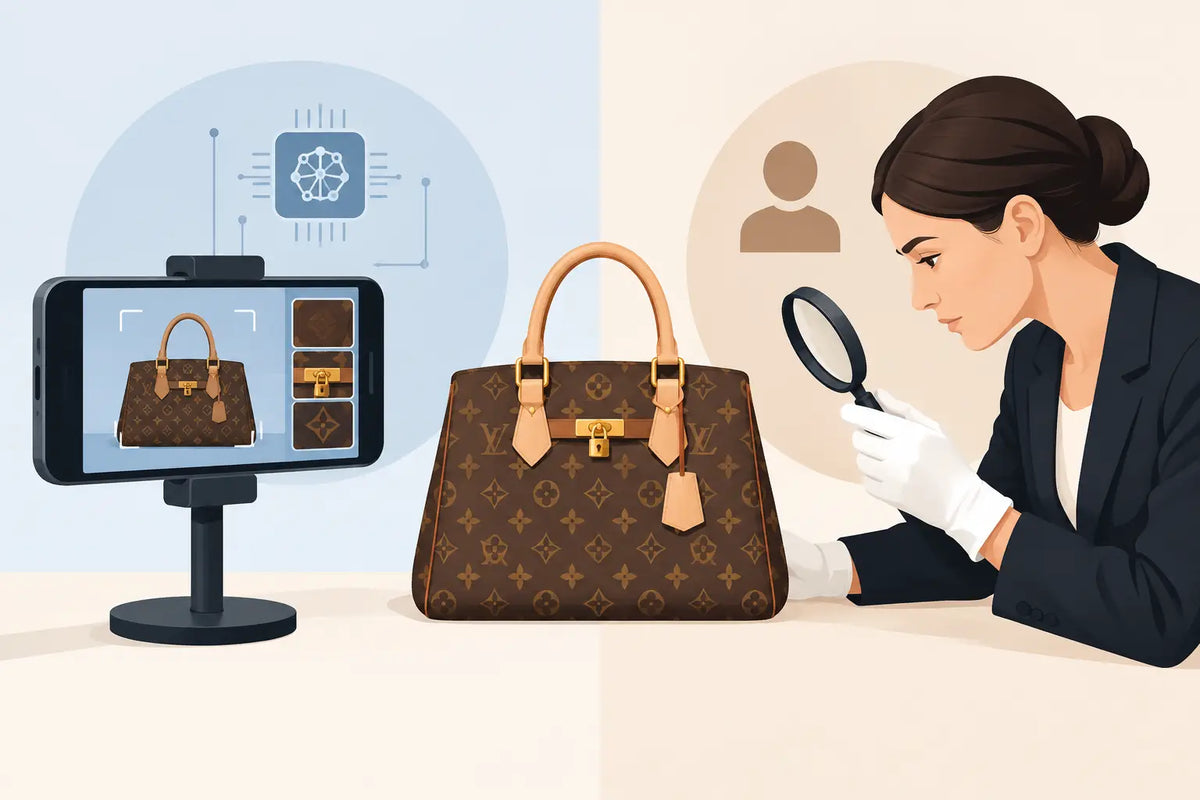
Entrupy is an authentication technology that uses a handheld device to capture highly magnified images of eligible luxury items. Its system analyzes those images against a large database of verified examples and applies machine learning to identify patterns associated with authentic and counterfeit goods. On supported items, this creates a fast, data-driven layer of review that is especially useful in a market where counterfeit production has become increasingly sophisticated.
Human authentication relies on trained specialists who study the details that define an authentic piece. They assess craftsmanship, materials, fonts, hardware, date codes or serial details where applicable, construction methods, and brand-specific design conventions. An experienced expert also understands that luxury houses evolve. A bag made in 2005 should not be judged by the exact same visual expectations as a current-season version.
Neither approach is a shortcut to careless buying. They serve different purposes. Entrupy brings consistency and microscopic analysis to the review process, while human expertise brings judgment, historical knowledge, and the ability to assess details that may fall outside a device’s eligible scope.
Where Entrupy adds meaningful confidence
The most compelling advantage of Entrupy is repeatable, image-based analysis. Counterfeits can mimic a logo plaque or a popular exterior silhouette remarkably well, particularly in photographs. Magnification allows the system to inspect material-level characteristics that are difficult to evaluate through standard product images or a quick visual check.
This can be particularly reassuring for buyers shopping remotely. Luxury resale is often an online transaction, and shoppers cannot always hold the bag, inspect its hardware under natural light, or compare its leather to a known authentic example before committing. A third-party technological assessment adds an objective checkpoint to a retailer’s own quality controls.
Entrupy also supports operational consistency. When a curated reseller reviews a steady flow of Louis Vuitton, Gucci, Chanel, and other sought-after pieces, a defined technology-assisted process helps ensure each eligible item receives the same level of technical scrutiny. That matters when a purchase is not simply about style, but about protecting the value of an investment piece.
Still, the result should be understood in context. Entrupy eligibility depends on the item type, brand, material, and available program coverage. A result is not a substitute for verifying that a bag’s style, components, and overall presentation are appropriate for its claimed production period. It is one powerful part of the review, not the entire story.
What a human expert sees beyond the scan
A knowledgeable authenticator understands the language of a luxury house. They know that Hermès craftsmanship has its own visual logic, that Chanel hardware and serial systems have changed over time, and that vintage Louis Vuitton pieces can show age-related characteristics that would confuse an inexperienced observer. This knowledge is especially valuable for limited editions, older bags, rare materials, altered items, and pieces with incomplete accessories.
Human review also helps distinguish authenticity from condition. A bag can be authentic and still have replaced hardware, a repaired corner, an added strap, interior odor, discoloration, or wear that affects its desirability and resale value. A buyer deserves a clear account of those details. Authentication establishes what the item is; condition disclosure explains how it presents today.
Context is equally important when evaluating provenance. Original receipts, dust bags, boxes, and authenticity cards can be helpful, but they are supporting materials, not automatic proof. These accessories can be lost, swapped, or counterfeited. An expert considers them alongside the item itself rather than allowing paperwork to outweigh the physical evidence.
There is also an important limitation to acknowledge: people can make mistakes. Human authentication is only as reliable as the specialist’s training, reference materials, access to the item, and willingness to say when a piece requires further review. The right response to uncertainty is not overconfidence. It is escalation, additional examination, or a decision not to list the item.
Why the best answer is often both
The choice is not truly Entrupy or human authentication. For many pre-owned luxury handbags, the most thoughtful approach combines the precision of technology with expert review and careful condition inspection.
A practical multi-step process begins with an in-hand assessment. The reviewer checks whether the bag appears consistent with the brand, model, materials, and era. On eligible pieces, Entrupy can then add its microscopic analysis. The final listing should reflect a quality-control review that looks beyond the authentication outcome, documenting condition, included accessories, dimensions, and notable signs of use.
This layered approach is valuable because counterfeiters do not stand still. Their methods change, and luxury brands update designs, packaging, serial practices, and materials. Technology can help identify fine-grain patterns at scale. Experts can recognize when a new variation, an unusual vintage detail, or a repair requires closer consideration. Together, they create a stronger standard than either method used casually or in isolation.
At The Luxe Affair, this distinction supports the boutique resale experience. An iconic bag should arrive as described, with the confidence that it has been reviewed through a process designed for luxury pieces, not treated like an ordinary secondhand transaction.
What buyers should look for before purchasing
Authentication claims should be specific enough to mean something. A seller that simply says “guaranteed authentic” without explaining its review standards asks the buyer to rely on a promise alone. Look for transparent language about expert authentication, third-party tools where used, and a clearly stated policy for authenticity concerns.
Product photography and condition notes are just as relevant. Close images of corners, handles, interior lining, hardware, and date or serial details when appropriate allow shoppers to understand the actual bag being offered. Luxury resale is not about expecting a pre-owned piece to look untouched. It is about knowing exactly what you are purchasing.
Price can provide useful context, too. A dramatic bargain on a highly demanded style should prompt thoughtful questions, especially when the listing is vague or photographs are limited. Authentic pre-owned luxury can offer meaningful value compared with boutique retail, but rarity, condition, and market demand still shape pricing.
Before checkout, consider the full purchase experience: authentication practices, item-specific condition disclosure, return terms, shipping security, customer support, and payment options. These details reveal whether a retailer is equipped to handle luxury goods with the care they require.
A note for sellers of luxury handbags
Sellers benefit from layered authentication as well. A credible review process can help protect a seller’s reputation, reduce dispute risk, and establish fairer resale expectations. It can also identify issues that affect value before a listing goes live, such as significant wear, missing components, or alterations.
If you are preparing to sell, send accurate photos and disclose repairs, prior restorations, odors, stains, missing accessories, and known ownership history. Transparency does not diminish an authentic item. It helps the right buyer understand it and supports a smoother resale experience.
The right luxury bag should feel exciting before it ever reaches your doorstep. Choose a seller whose authentication process is careful enough to respect the craftsmanship, value, and history behind the piece you are ready to make your own.