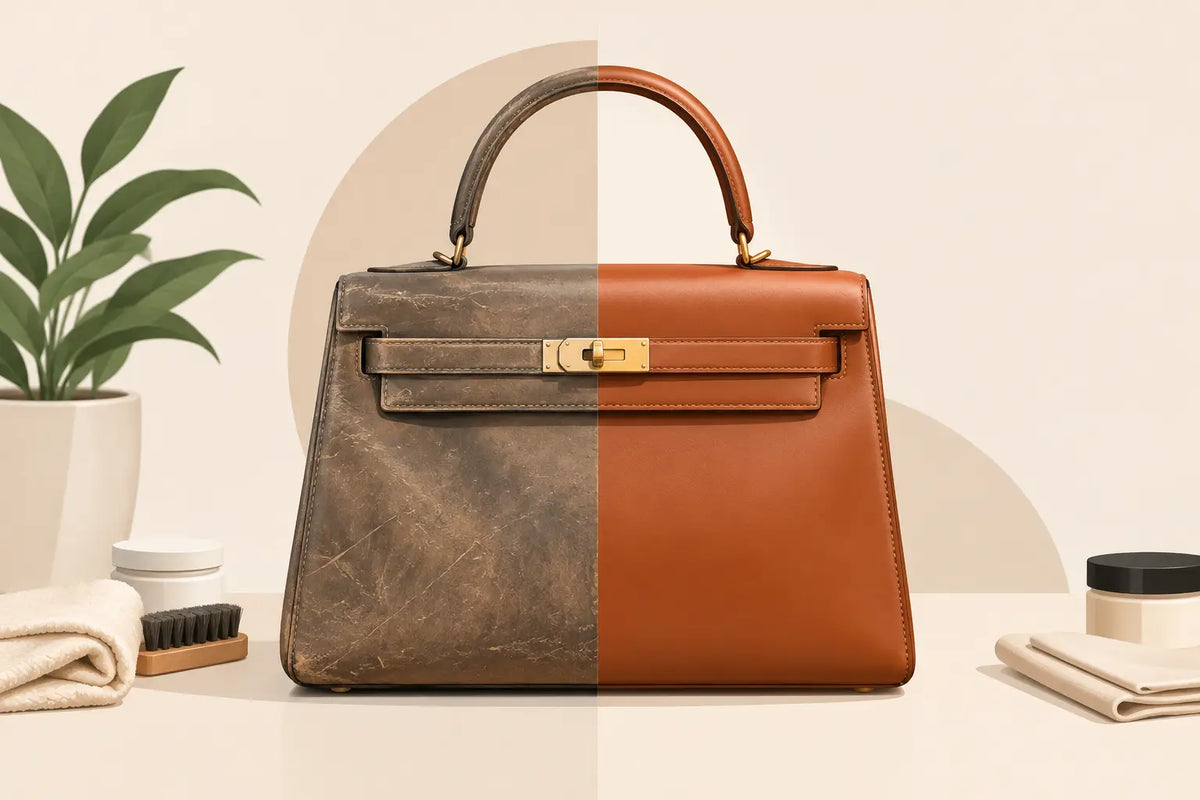
When Handbag Restoration Is Worth the Investment
A softened corner on a Chanel flap, darkened handles on a Louis Vuitton, or a scratched turn-lock on a Gucci bag can make an otherwise exceptional piece feel less collectible. Handbag restoration can change that - but only when the work respects the bag’s original craftsmanship, materials, and character. For a luxury handbag, the goal is rarely to make it look brand-new at any cost. The goal is to preserve an iconic piece beautifully and responsibly.
A thoughtful restoration can extend the life of a bag you wear often, improve its appeal when it is time to resell, and help protect the value attached to exceptional design. Poor restoration, however, can erase original details, create an unnatural finish, and raise questions for future buyers. Knowing the difference is part of owning luxury with confidence.
What Handbag Restoration Can Repair
The right specialist can address many of the signs of use that accumulate over years of wear. Surface cleaning, leather conditioning, corner touch-ups, edge-paint repair, handle reinforcement, hardware polishing, lining repair, and strap adjustments are all common services. The best results are subtle. A restored area should blend naturally with the rest of the bag rather than announce itself from across the room.
Leather care is among the most requested forms of restoration. Smooth calfskin may benefit from professional cleaning and carefully matched color work where scuffs have exposed the underlying leather. On bags with painted edges, such as many structured top-handle styles, rebuilding cracked or peeling glazing can make handles feel finished and comfortable again.
Hardware can often be cleaned or polished to reduce dullness and light scratching. Still, hardware restoration deserves restraint. Aggressive polishing can remove plating, soften crisp engravings, or alter the original finish. A softly aged gold-tone closure may be more desirable than a bright but overworked one.
Interior work can also be worthwhile. A detached pocket, loose lining, or torn seam affects how a bag functions and can worsen with use. Repairs that stabilize the interior without changing its original construction are usually a smart investment, especially for bags intended to remain in regular rotation.
The Difference Between Restoration and Reinvention
Luxury collectors tend to value originality. That makes preservation a more useful standard than perfection. The patina on a vintage Louis Vuitton canvas piece, gentle creasing on lambskin, or minor wear on a well-loved Hermès bag tells part of the story of the item. Removing every visible sign of age is not always possible, necessary, or desirable.
Recoloring is the clearest example. A professional color refresh can be appropriate when a bag has significant, uneven fading or widespread surface loss. It becomes a different decision when the original color is being fully replaced. Changing a bag from one shade to another may limit its resale audience, and a finish that is too thick can affect the look and feel of the leather.
The same caution applies to structural changes. Replacing handles, shortening straps, adding feet, or modifying closures may make a bag suit one owner better, but those alterations can reduce appeal for a future buyer seeking an original example. If resale value matters, keep all removed components whenever possible and document the work completed.
A bag does not need to be flawless to be desirable. It needs to be authentic, well cared for, accurately represented, and appropriate for its age. That distinction matters in the pre-owned luxury market, where informed buyers often recognize both quality craftsmanship and overly aggressive repair work.
When Handbag Restoration Is Worth It
Restoration is most compelling when the bag has enduring demand, quality construction, and damage that is largely cosmetic or contained. An iconic style in a neutral colorway may justify a higher level of professional care than a heavily damaged seasonal piece with limited resale demand. Sentimental value matters, too. A bag tied to a milestone or gift may be worth restoring even if the cost will not be recovered at resale.
Before authorizing work, compare the repair estimate with the bag’s current condition, likely resale value, and future use. A modest edge-paint repair or interior seam repair may be easy to justify. Full recoloring, extensive leather replacement, or structural reconstruction should be considered more carefully. There is no universal rule because brand, model, material, rarity, and the quality of the restoration all affect the equation.
Exotic skins require especially careful consideration. Crocodile, alligator, ostrich, and lizard should only be handled by a conservator or repair specialist with demonstrated experience in that material. The wrong cleaning product, dye, or conditioner can permanently affect the finish, scales, texture, or color variation that makes these pieces distinctive.
For highly collectible bags, contacting the original fashion house may be the preferred first step. Brand repair programs can offer access to matching materials and style-specific expertise, though costs, turnaround times, and repair options vary. An independent luxury repair specialist may be a better fit for a discontinued bag, a more practical repair, or work outside a brand’s service scope. Ask to see examples of comparable work before committing either way.
How to Choose a Restoration Specialist
A quality restoration provider should ask questions before promising results. They should want to know the brand, age, material, color, damage history, and whether your priority is daily use, preservation, or resale. Be cautious with any service that guarantees a bag will look “like new” without inspecting it closely.
Ask whether the specialist will use color-matched leather products, whether repairs can be reversed or retreated, and how they protect logos, stamping, stitching, and hardware. Request clear photographs before and after the work, especially if the bag will later be sold. Documentation gives you a more accurate record of the piece’s condition and care.
It is also wise to ask about the limits of the repair. A reputable specialist will explain what cannot be fully corrected: deep cracking, extensive color transfer, weakened leather, odor embedded in lining materials, or missing proprietary hardware may require compromise. Honest expectations are a sign of skilled work, not a lack of capability.
Care That Helps You Avoid Major Repairs
Restoration is not a substitute for regular care. Store handbags upright when possible, lightly filled with clean tissue or an insert that supports the shape without stretching it. Keep chains tucked inside or protected so they do not imprint the leather, and avoid hanging structured bags by their handles for long periods.
Use a dust bag, but avoid storing a handbag in sealed plastic where moisture can become trapped. Keep it away from direct sunlight, heat, fragrance, and color-transfer risks such as dark denim. If a spill occurs, blot gently with a dry, light-colored cloth and seek professional advice before applying household cleaners or internet-recommended remedies.
For bags you plan to sell, condition transparency is just as valuable as care itself. Retain receipts, repair records, detachable straps, dust bags, authenticity cards where applicable, and original accessories. These details can strengthen buyer confidence and help a pre-owned piece present as complete and well maintained.
Restoration and Resale Value
A carefully repaired bag may command stronger interest than the same style with obvious damage, particularly when the work is limited, well executed, and disclosed. But restoration does not automatically increase value dollar for dollar. Buyers assess the overall piece: authenticity, desirability, condition, originality, included accessories, and the credibility of the seller all matter.
If you intend to resell, disclose meaningful restoration plainly. Describe what was repaired, when it was completed, and whether color was refreshed or parts were replaced. Clear disclosure protects trust and allows buyers to make an informed decision. In luxury resale, that confidence is often more valuable than trying to conceal a repair.
The most successful handbag restoration is the one that lets the bag remain itself: recognizable, functional, authentic, and ready for its next chapter. Before approving any work, choose the repair that honors the piece you own - not an imagined version of it.