Retail Versus Resale: Which Luxury Bag Fits?
A classic Chanel flap may be waiting in a boutique display case, while an equally compelling pre-owned piece may offer a discontinued color, a more favorable price, or the exact vintage detail you have been searching for. Retail versus resale is not simply a question of new versus used. For luxury handbag buyers, it is a decision about access, condition, timing, provenance, and the kind of ownership experience you value.
A designer bag is rarely an impulse purchase. Whether you are choosing a first Louis Vuitton, adding an Hermès silhouette to a growing collection, or investing in a Dior piece you plan to wear for years, the right path depends on the bag and your priorities.
Retail Versus Resale: The Real Difference
Retail means purchasing directly from a brand boutique, department store, or authorized retailer. The item is new, available in the current collection, and sold at the brand's established price. You receive the complete first-owner experience: pristine condition, current packaging, and the certainty that comes with buying through an authorized channel.
Resale means purchasing a previously owned item through a secondary-market seller. In luxury, that can include bags that have been gently carried, carefully stored, never used, or sourced from an older collection. The best resale boutiques offer a curated alternative to peer-to-peer shopping, with professional authentication, detailed photographs, and clear condition disclosures.
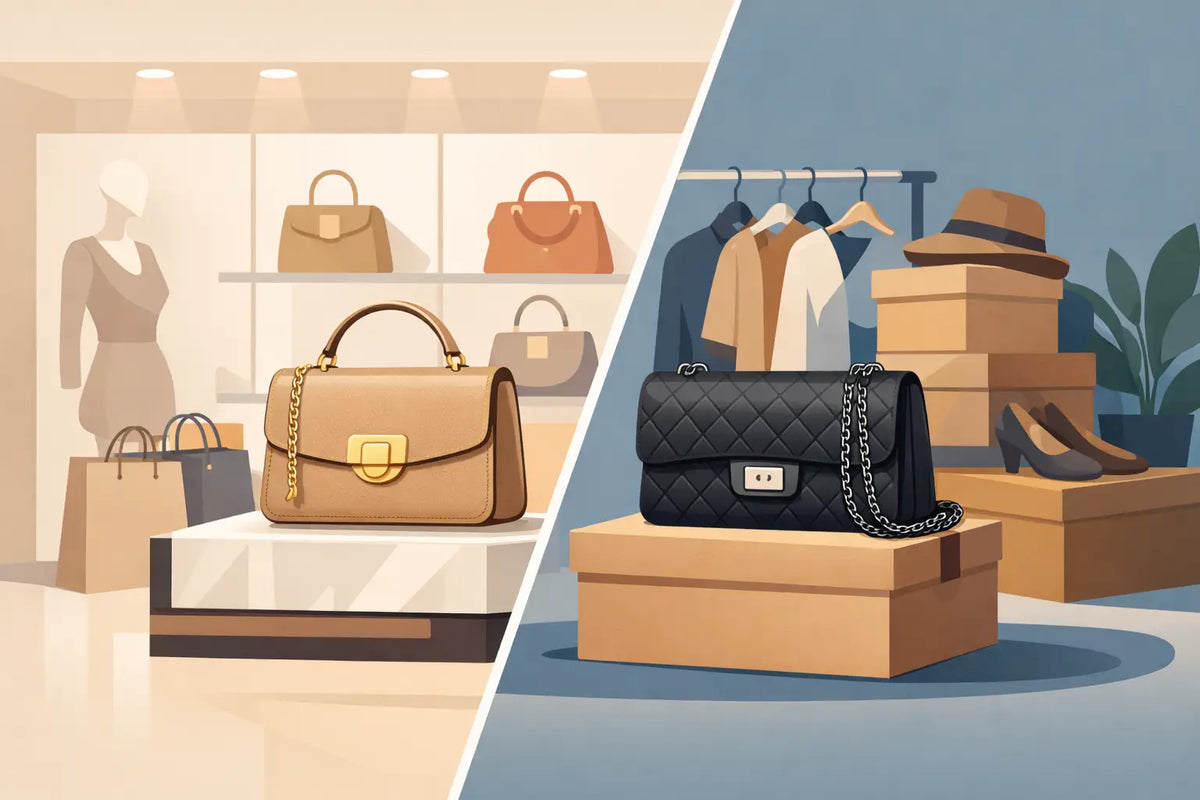
Neither option is automatically superior. A current-season bag in a highly specific color may make more sense at retail if owning it new matters most to you. A sold-out Chanel, a vintage Gucci, or a hard-to-find Louis Vuitton may be far more attainable through resale. The strongest choice is the one that matches your style, budget, and expectations for the piece.
What You Pay For at Retail
Buying at retail delivers a very particular form of certainty. You know the item has not been used, altered, or stored outside the brand's own supply chain. For many shoppers, that clean beginning is meaningful, especially when the bag marks a milestone or will become an everyday signature.
Retail also provides direct access to current releases. If a fashion house has just introduced a new hardware finish, seasonal color, or updated silhouette, its boutiques will be the first place to find it. This matters for buyers who want the latest design language rather than a past-era version of an icon.
Still, retail has limits. Popular bags can be unavailable, waitlisted, or reserved for established clients. Certain styles are difficult to purchase at any price without a purchase history or the right timing. Retail pricing is also fixed, and price increases can make a coveted bag substantially more expensive from one season to the next.
For some luxury shoppers, those limits are part of the boutique experience. For others, they are exactly why resale deserves serious consideration.
Why Resale Has Become a Luxury Buying Strategy
The resale market creates access where the primary market can be restrictive. It is where shoppers often find discontinued styles, prior-season colors, vintage craftsmanship, and bags that are no longer readily available through boutiques. Rather than choosing only from what is currently on the shelf, you can shop across years of fashion history.
Price is a major part of the appeal, but it should not be the only one. Depending on demand, condition, age, and rarity, a pre-owned luxury bag may be priced below current retail, close to retail, or above it. A rare Hermès color, a sought-after Chanel vintage, or a limited Dior release can command a premium because availability is limited.
That is why resale is best understood as a value market, not a discount market. The value may be financial, but it can also be aesthetic. You may prefer an older iteration of a bag, a canvas print that is no longer produced, or a piece with a distinctive patina that cannot be replicated by buying new.
Resale can also make luxury ownership more flexible. A buyer who understands the secondary market may choose a bag with enduring demand, enjoy it, then later sell or consign it when her wardrobe changes. That does not guarantee a return, and no handbag should be purchased solely as an investment. Yet well-chosen luxury pieces can retain meaningful market interest when their condition, authenticity, and desirability are preserved.
Condition Is Part of the Purchase Decision
A pre-owned bag should never be judged by a single label such as “excellent” or “good.” Condition needs context. Corner wear, softened leather, hardware scratches, interior marks, odor, altered finishes, and missing accessories can all affect how a bag looks, wears, and holds value.
Look closely at the areas that matter most for the design. On a structured top-handle bag, examine shape retention, glazing, and handle condition. On a chain bag, assess hardware finish, leather threading, and the integrity of the interior. For coated canvas styles, review corners, trim, and the condition of straps or handles. A bag can be beautifully preserved overall while still showing normal signs of prior use.
The right condition standard depends on your purpose. If you want a pristine collectible, a like-new or unused piece may be worth the added cost. If you plan to wear the bag frequently, minor, honestly disclosed wear can present excellent value. The key is not expecting perfection at a pre-owned price. It is knowing exactly what you are buying before it arrives.
Authentication Is the Non-Negotiable
The greatest difference between a confident resale purchase and a risky one is verification. Luxury counterfeits have become increasingly sophisticated, and a beautiful listing is not proof of authenticity. Neither is a dust bag, a receipt, a serial number, or a seller's personal assurance.
Choose a reseller that treats authentication as a core service, not an afterthought. A credible luxury seller should provide a clear authentication position, condition transparency, detailed imagery, responsive support, and secure checkout. Third-party expertise can add another layer of confidence, particularly for high-demand brands that are frequently counterfeited.
At The Luxe Affair, curated pre-owned luxury is backed by an authentication-first approach, including expert resources such as Entrupy and Legit App where applicable. That focus allows the experience to feel considered and secure, rather than like a gamble on an anonymous marketplace.
For sellers, the same standard matters. A trusted resale partner can help position a handbag accurately, evaluate its market appeal, and place it in front of buyers who understand its value. Strong documentation, careful storage, and truthful condition information help protect both the seller and the next owner.
How to Decide Between New and Pre-Owned
Start with the specific bag, not a broad assumption about retail or resale. Ask whether the exact style is currently available through an authorized boutique. If it is, compare the retail price with resale listings in comparable condition. Factor in accessories, age, material, color, and whether the pre-owned version represents a past design you actually prefer.
Then consider how you intend to use it. A new everyday tote may be the right choice if you want years of wear beginning with an untouched piece. A pre-owned evening bag, seasonal color, or archival silhouette may be smarter if you want access without paying current boutique pricing for something you will carry occasionally.
Also be realistic about availability. Waiting for a bag can be worthwhile when it is a current icon you want to buy directly from the house. But if the wait has become indefinite, or the exact version you love is discontinued, resale may offer the more direct and satisfying route.
Finally, protect the purchase after it is made. Store the bag thoughtfully, avoid overfilling it, keep it away from prolonged heat and moisture, and retain its accessories and documentation. Good care improves your ownership experience and preserves options should you ever decide to resell.
Luxury ownership should feel personal, not pressured. Buy at retail when the new-boutique experience and current collection are what you want. Choose resale when rarity, thoughtful value, and access to fashion's most memorable pieces matter more. The best bag is not defined by where it began - it is the one you will reach for, enjoy, and carry with complete confidence.